UFC Method of Victory Betting: Markets, Stats and Weight-Class Strategy
 Available in US
Table of Contents
- Method of victory is the market for predicting how, not who
- What you can actually back on the Method of Victory shelf
- How eleven UFC divisions actually end fights
- When a KO/TKO ticket is expensive and when it is fair
- The submission market lives or dies on grappling background
- Why backing a fight to go the distance is a real strategy
- Method of Victory Double Chance, the quiet edge case
- Ten pounds at 11/4 on a submission, broken down
- Quick answers UK bettors ask about Method of Victory
- The three-step Method of Victory playbook
Method of victory is the market for predicting how, not who
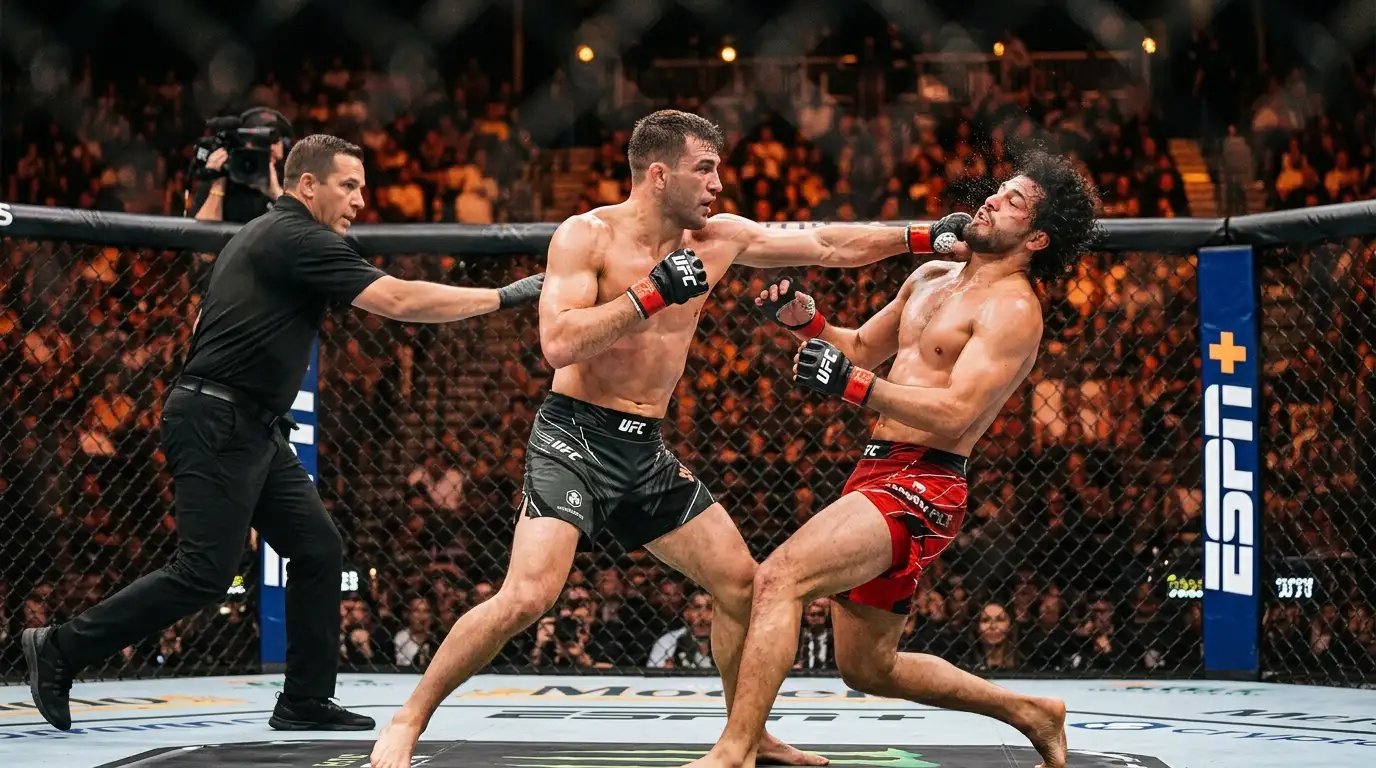
The first big lesson I learned about Method of Victory came at UFC 217 in 2017, the night three title-holders lost in a row. I had backed every favourite to win in their named manner — Cody Garbrandt by decision, Joanna Jędrzejczyk by decision, Michael Bisping by decision. The favourites all lost, and the underdogs all finished. One night, three lessons, all of them about the same thing: Method of Victory is not the moneyline with extra steps. It is a genuinely different bet on a genuinely different question.
The moneyline asks who wins. The Method of Victory market asks how. Those two questions have completely different risk profiles, completely different price dynamics, and completely different links to the things you can actually research about a fight. The UFC heavyweight division finishes roughly 67 per cent of its bouts inside the distance, with KO/TKO and submission combined. The Women’s Strawweight division finishes only a third of its bouts that way — almost 67 per cent of strawweight fights go to the judges. Same sport, same five-minute rounds, two completely different markets when you price them by method. Treating the divisions as interchangeable is the easiest hundred quid you will ever lose.
See also: how do i bet on ufc fights for KO, submission and decision markets.
What you can actually back on the Method of Victory shelf
Every UK bookmaker carrying UFC will list a single-method shelf as standard. Fighter A by KO/TKO. Fighter A by Submission. Fighter A by Decision. Same for Fighter B. Six selections per bout. The price on each one reflects two probabilities multiplied together: how likely the fighter is to win, and how likely the fight is to end in that specific manner if they do win. Six numbers, one fight, every operator on the UK market.
The second shelf is To Win in a Specific Round, which is method of victory in disguise — winning in Round 1 is almost always by finish, while winning in Round 5 is functionally a unanimous decision read with one round of overtime risk. The third shelf, the one that separates serious UFC operators from casual ones, is Method of Victory Double Chance, which pairs two methods together at a reduced price. “Fighter A by KO/TKO or Submission” is the most common version. The price is shorter than the single-method shelf because two methods cover more outcomes, but it eliminates one of the biggest random-pick risks the market carries.
Beyond those, the major UK books offer Method and Round combos, To Win by Decision Only, To Win by Submission Only and a handful of more exotic props like First Finishing Strike. The exotics dry up as the prelim card runs into deep matchups with light data. Worth knowing that the depth of the Method of Victory shelf is itself a quality signal — a bookmaker that posts only three methods per fighter on a UFC Fight Night undercard is one that does not have the modelling appetite to price the long tail. Their headline numbers are still fine, but their props are worth less attention.
The hierarchy of risk on a Method of Victory ticket runs roughly like this: a single-method pick is the highest variance and the longest price, a Method of Victory Double Chance is mid-variance and mid-price, and a moneyline is the lowest variance and the shortest price for any given fighter. Choosing which shelf to play on is the first and most consequential pricing decision you make on every UFC bet.
How eleven UFC divisions actually end fights
The way a division finishes its fights is the single piece of context I check before pricing anything on the Method of Victory shelf. Three divisions anchor the entire conversation, and everything else can be read against them. Here are the three I have hard numbers on.
| Division | KO/TKO % | Submission % | Decision % |
|---|---|---|---|
| Heavyweight | roughly 50% | roughly 17% | 28.6% |
| Welterweight | 32.7% | below average | 47% |
| Women’s Strawweight | 13.4% | below average | 66.9% |
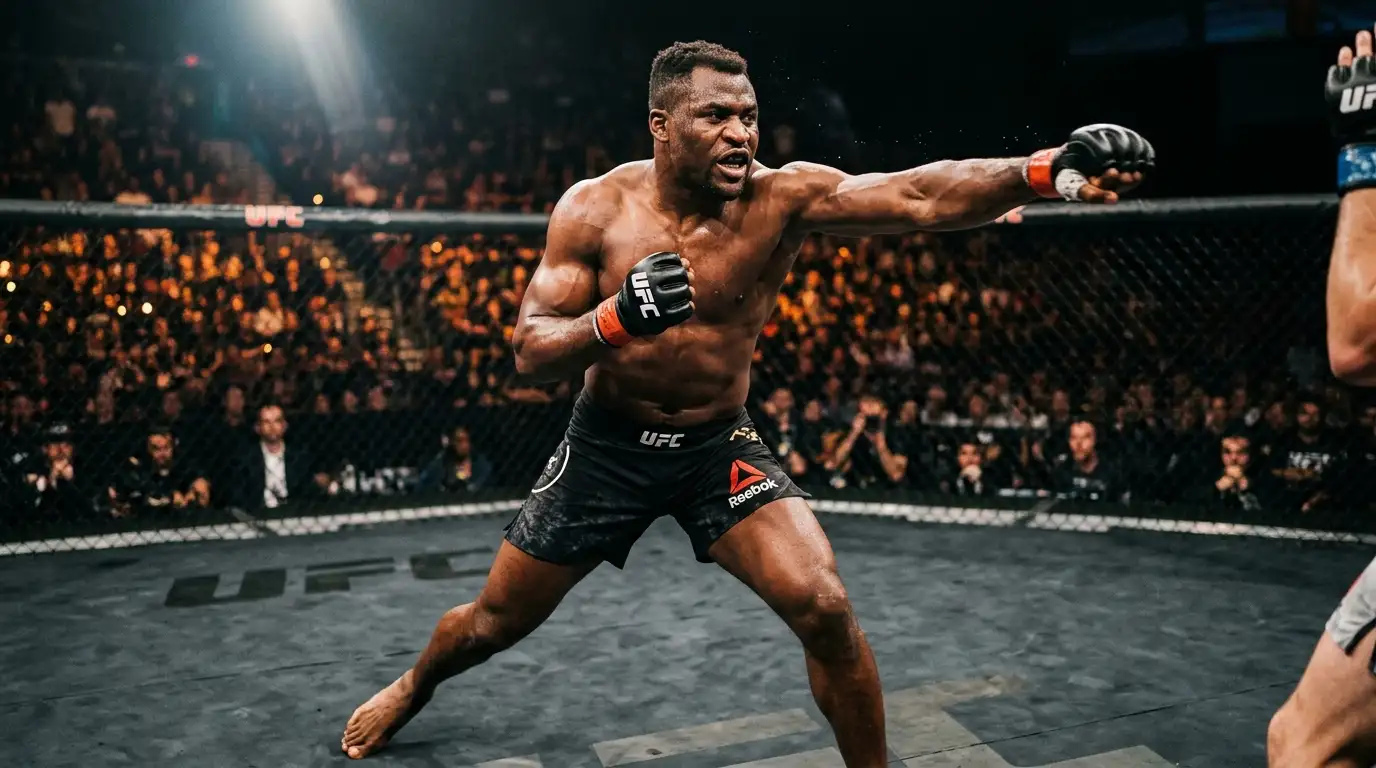
Heavyweight is the only division where backing a fight to end early is the baseline assumption. About two thirds of heavyweight bouts finish inside the distance, with the bulk of that being KO/TKO. The reason is structural: heavyweight punching power is so concentrated that any clean shot in the first ten exchanges of a round can end the fight. The decision rate sits at 28.6 per cent, the lowest in the UFC. If you are pricing a heavyweight headliner and the over 1.5 rounds line looks long, that is usually a signal that the market has already priced in the elevated finish probability.
Welterweight is the textbook middle ground. About a third of welterweight fights end in KO/TKO. Almost half — 47 per cent — go to the judges. Submissions sit below average. The combination produces the most distributed Method of Victory market in the UFC, with no single outcome dominating the price structure, which is exactly the market shape where serious handicapping pays best.
Women’s Strawweight is the other end of the spectrum. Only 13.4 per cent of strawweight bouts end in KO/TKO. Two thirds — 66.9 per cent — go to the judges. The division is built on volume striking, technical grappling and cardio rather than knockout power, and that flows directly into the Method of Victory market. Backing a strawweight fight to go the distance at almost any reasonable price is the closest thing UFC has to an evergreen value play.
Between those three anchors, the other eight divisions distribute themselves in ways that mostly track what you would expect from watching the fights. Light heavyweight finishes heavily, similar to heavyweight in shape if not magnitude. Middleweight skews toward finishes with a meaningful late-round decision tail. Lightweight is one of the most volatile divisions, with submissions playing a bigger role than in any other men’s class because the lightweight talent pool is the deepest grappling pool in the UFC. Featherweight and bantamweight skew toward decisions, with cardio and pace doing more of the heavy lifting than power. Flyweight sits closer to strawweight on the decision-heavy end. The women’s bantamweight and flyweight divisions are decision-leaning but with a higher KO/TKO share than strawweight. If you are working on a fight in any of those divisions and want a deeper breakdown of how the price actually moves in the most finish-heavy class, our piece on how heavyweight finish rates change the price walks through the heavyweight-specific dynamics with a few worked examples.
When a KO/TKO ticket is expensive and when it is fair
Three years ago I sat in a Manchester pub watching a heavyweight headliner with a friend who had backed the favourite by KO at 6/4. He kept saying it was a great price. It was not a great price. It was a fair price, and he was confusing low odds with low value, which is one of the most common KO/TKO market errors I see UK bettors make.
A KO/TKO ticket is expensive — meaning the price is shorter than its underlying probability — in two specific scenarios. First, when the division naturally finishes heavily, the market knows it, and the price has compressed accordingly. A heavyweight favourite at 6/4 to win by KO/TKO is not value; it is a market price reflecting roughly 40 per cent implied probability against a fighter whose actual KO probability might also be 40 per cent. Second, when the fighter has a recent knockout reputation. Reputation prices are sticky. A power puncher coming off three consecutive first-round finishes is priced as if the next fight will go the same way, which it might, but the market has already taken the meat off the bone.
A KO/TKO ticket is fair value — meaning the price is long enough to compensate for the probability — when one of three things is true. The fighter has a quietly elevated knockdown rate that has not yet produced finishes because the previous opponents survived the standing eight. The matchup involves a southpaw-versus-orthodox imbalance against an opponent with poor lateral movement, which is the classic setup for a clean lead-hand shot. The fighter is moving up or down a division in a way that changes the relative power dynamic — a former bantamweight champion moving to featherweight typically loses some power-per-pound; a featherweight moving to bantamweight typically gains it.
The third category, the genuine traps, is the one that costs people money. A KO/TKO ticket on an underdog with no recent finishing history is almost always priced as a long-shot dream, and the long-shot dreams do not pay across a season. The most reliable rule of thumb I have is that an underdog by KO/TKO is only worth backing if you can articulate, in one sentence, the specific physical or technical reason the finish is coming. If you cannot, you are buying lottery tickets.
The submission market lives or dies on grappling background
Submissions are the Method of Victory market that rewards prep work the most. Anyone can watch a fight and have an opinion on who looks like a knockout puncher. Reading submission risk requires going one layer deeper into a fighter’s background, which means most UK punters do not bother, which means the prices are softer than they should be on the right fighters. That is the whole edge.
The first thing I look at on any submission read is a fighter’s grappling lineage. A Brazilian black belt with a sport jiu-jitsu medal portfolio is a different submission threat from a wrestler with a strong base who learned guard passing on the way up. The threat shape is different. Both can submit opponents but the path differs — the BJJ specialist will hunt from guard, the wrestler will hunt from top control. Matchup matters more than line: a BJJ specialist against a fellow black belt is a wash, while the same specialist against a striker with poor takedown defence is a real market.
The second thing is finish-tape rate. A fighter with five submissions in their last twelve appearances has a stable submission rate. A fighter with five submissions in their first twelve UFC fights and zero in the last six is signalling that the league’s defensive grappling has caught up with their particular setups. The trajectory matters as much as the lifetime total. UFC favourites won 64.8 per cent of their bouts in 2022 across 511 fights with a clear price line, and a meaningful slice of those wins came by submission — but the submission share is heavily concentrated in lightweight and featherweight, where the grappling depth is unusual.
Submissions are also where the close-call market kicks in hardest. UFC bouts priced from minus one hundred and twenty-two to plus one hundred — the genuine coin-flip zone — land only 51 per cent of the time. Submission props inside that zone are particularly noisy because the chance of either fighter catching the other in a scramble is non-trivial and not well captured by any pre-fight model. If you are taking a submission ticket on a close-call bout, size it small. The reward is real, the variance is large, and bankroll discipline is the only thing that keeps the strategy alive across a season.
Why backing a fight to go the distance is a real strategy
Backing UFC fights to go the distance gets dismissed by casual bettors as “boring betting”, which is partly why it pays. The decision is the most under-priced finishing line on the entire shelf because it is the least exciting outcome to predict, and the market reflects that emotional dynamic in subtle ways.
The structural argument for the decision bet is simplest in strawweight. Two thirds of strawweight fights — 66.9 per cent — go to the judges. The number is not changing materially from event to event; it is a structural property of the division. If a strawweight bout is priced at decimal 2.10 to go the distance, the implied probability of 47.6 per cent is below the long-run base rate. You are buying the result the division produces most often at a price the book set as if the division produced it less often. That is the simplest value bet in UFC by some distance.
The argument extends to other decision-heavy divisions in a softer form. Welterweight at 47 per cent decision rate has a similar but less extreme version of the same dynamic, and the prices are sharper because more punters watch welterweight. Featherweight and bantamweight skew toward decisions. Even women’s bantamweight, despite having one of the most aggressive striking fields of the women’s classes, generally finishes a minority of its bouts.
What makes the strategy real rather than mechanical is the matchup overlay. A decision-leaning division in a stylistically clashing matchup — say a pure striker against a pure grappler — can end early in either direction, and the base-rate decision argument weakens. The same division in a stylistically symmetrical matchup — two strikers of similar reach, two grapplers of similar pedigree — strengthens the decision argument substantially. Read the base rate, then read the matchup. If both point toward distance, the ticket is worth a serious look.
Method of Victory Double Chance, the quiet edge case
Most UK books do not market Method of Victory Double Chance heavily because the customer base does not ask for it loudly. The shelf is there, usually two clicks deep into the bout page, and it pairs two methods at a reduced combined price. “Fighter A by KO/TKO or Submission” is the most common version — a finish bet that covers both finishing routes without specifying which one.
The shelf is useful in two specific situations. First, when you have strong conviction that the favourite wins inside the distance but only weak conviction about which finish style they bring. A KO/TKO-or-Submission ticket on a heavyweight favourite priced at 4/5 collapses both finish routes into one number. Same general read, lower variance, lower price. Second, when the fighter’s recent finishing form has been split — a string of wins half by knockout and half by submission — and the market has priced the single-method shelf accordingly long because it cannot decide which method is the right call. The Double Chance ticket cuts through the indecision at a price that reflects the combined probability without paying full long-shot tax on either route.
The shelf to avoid on Method of Victory Double Chance is the “Decision or KO/TKO” version on heavily-finishing divisions. The two outcomes are negatively correlated — if the fight is going to finish it is rarely going to a decision, and vice versa — so the combined price is essentially a lower-juice moneyline with extra steps. You are paying for variance reduction that the underlying probabilities do not support.
Ten pounds at 11/4 on a submission, broken down
Let me walk through a worked example. UFC lightweight prelim, two grapplers, the favourite priced at 4/9 on the moneyline. The single-method submission shelf prices Fighter A by Submission at 11/4. You stake ten pounds.
The arithmetic is short. 11/4 means eleven units of profit on four units of stake — on a ten pound bet, that is twenty-seven pounds fifty profit and a total return of thirty-seven pounds fifty. The implied probability of 11/4 is denominator over the sum, which is four over fifteen, or 26.7 per cent. The bet has positive expected value if your read of Fighter A’s actual submission probability against this opponent is higher than 26.7 per cent.
Now the modelling step that most punters skip. The 26.7 per cent implied is the joint probability that Fighter A wins and the win comes by submission. If Fighter A’s moneyline implies they win 69.2 per cent of the time — which 4/9 does — then the implied submission share of their wins is 26.7 divided by 69.2, or roughly 38.6 per cent. That is the figure to compare against your read. If you believe Fighter A wins 70 per cent of these fights and that 50 per cent of their wins come by submission against this specific opponent, your real-probability estimate is 35 per cent, which is meaningfully above the 26.7 per cent the market implies. The bet has positive expected value of about 31 per cent on your stake.
The break-even threshold is the implied probability itself: 26.7 per cent. Anything below is a losing bet across a long sample; anything above is a winning one. The size of the gap tells you how big the edge is. Across a season of carefully-staked Method of Victory submission plays, a consistent five-percentage-point edge over implied probability produces a small but real positive return. A ten-percentage-point edge produces a substantial one. Bets without that edge calculation are gambling.
See also: method trends vary by weight class — read our welterweight betting analysis.
Quick answers UK bettors ask about Method of Victory
Three questions cover most of what newcomers ask me when they start working through their first Method of Victory tickets. The fourth comes up less often but trips even experienced punters when it does.
The single-method shelf on most UK books does not include a draw as a separate selection. If the fight ends in a majority or split draw, single-method tickets are graded as losses or voids depending on the operator’s rules. A small number of books offer a ‘Draw’ selection within the Method of Victory shelf as a high-odds outlier — typically priced at 33/1 or longer — but it is not standard across the UK market. Check the bookmaker’s UFC rules section before placing a draw-sensitive bet. Disqualifications and No Contests are handled inconsistently across UK books. Some operators settle them as ‘Other’ within the Method of Victory market, which is functionally a loss on a single-method ticket. Some void the bet and return the stake. The variation is wide enough that you should not assume what your book does without checking. Method of Victory Double Chance tickets are particularly worth checking, because some books void the entire ticket on a DQ even when only one leg’s outcome was decided. Heavyweight has the highest combined finish rate at roughly 67 per cent, with KO/TKO making up the larger share of those finishes. Light heavyweight runs a similar profile in shape, with a finish rate close to but slightly below heavyweight. The lowest KO/TKO division is Women’s Strawweight at 13.4 per cent. The gap between the two extremes is one of the largest structural differences in any sport, and it is the central reason Method of Victory betting works on a division-by-division basis rather than as a unified strategy.Can a UFC method of victory bet include a draw?
What happens to a method of victory bet if the fight ends by DQ?
Which UFC division has the highest KO/TKO finish rate?
The three-step Method of Victory playbook
Three things to carry forward. Read the division’s finish profile before pricing any Method of Victory ticket — heavyweight, welterweight and strawweight are the three anchors, and the rest of the UFC distributes between them in ways that almost always favour the conservative read. Calculate the implied probability of the price you are about to take, and translate it into a probability conditional on the moneyline, so you know what edge the bet actually requires. Avoid single-method tickets on close-call bouts where your read is genuinely uncertain — the 51 per cent landing rate in the coin-flip price band tells you those fights are noise machines, and Method of Victory tickets multiply the noise.
Dana White had it right last December when he said London is one of the premier fight cities in the world and the energy at the O2 was the kind that breaks records. The UK fan base for UFC has earned that level of attention from the promotion, and the Method of Victory market is one of the most rewarding ways to engage with the sport beyond simply backing winners. Take it seriously, stake it modestly, and the long-run results will follow.
Written by the editors at how do i bet on ufc Fights.