UFC Reach and Stance Handicapping: A Bettor’s Framework
 Available in US
Table of Contents
Why a four-inch reach gap is almost never what you think it is
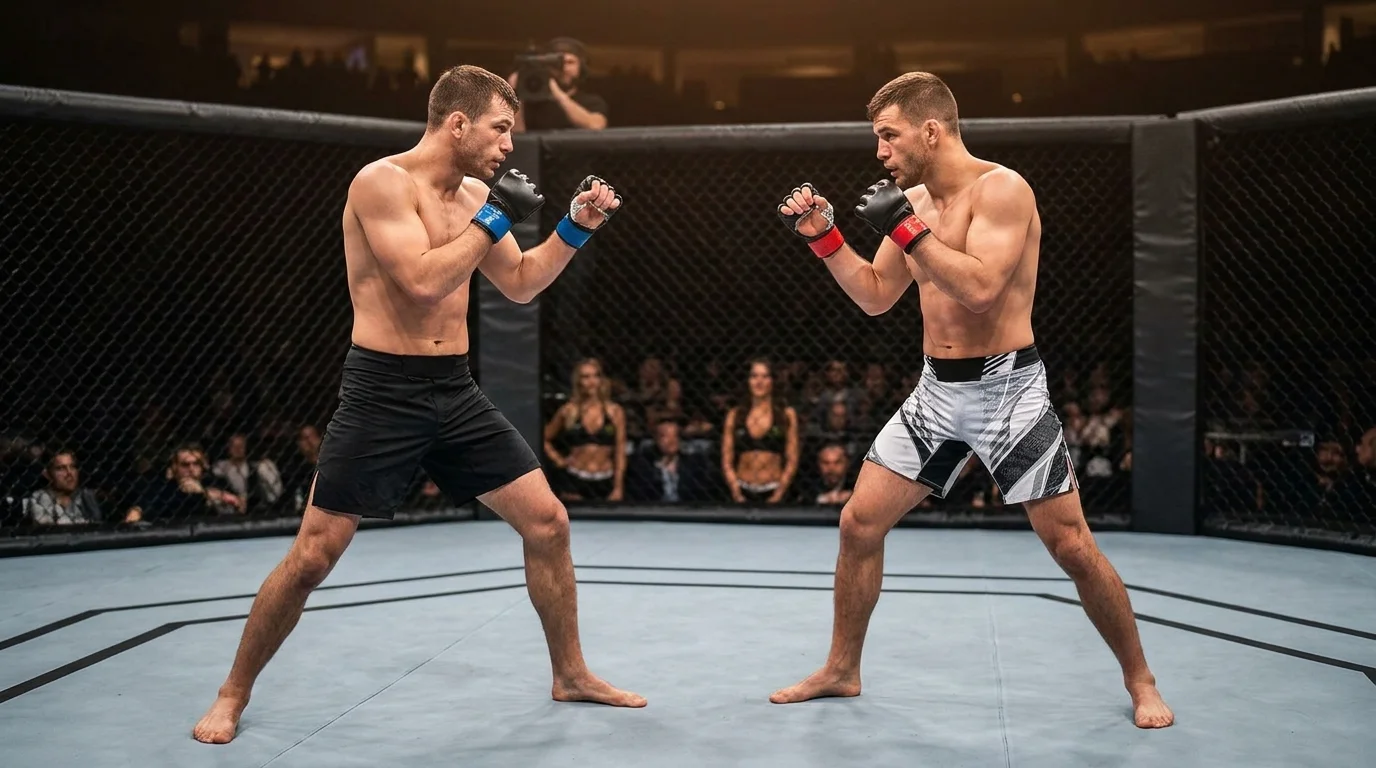
The single most over-cited stat in pub-level MMA analysis is reach. “He’s got a four-inch reach advantage” is the kind of thing you hear right before someone confidently backs the wrong fighter. The truth is messier and more interesting: reach matters enormously in some match-ups and is almost irrelevant in others, and the difference is style, not centimetres.
I learned this in the most expensive way possible — backing a rangy striker at 4/6 against a pressure fighter at 6/4 because the reach gap looked decisive on paper. The shorter fighter walked the taller one down for fifteen minutes, smothered the jab, and won three rounds clean on the cards. The reach advantage was real. It just didn’t translate, because the stylistic match-up made it impossible to weaponise.
See also: how do i bet on ufc fights for stat-based fight analysis.
When reach actually pays
Reach pays when the longer fighter has both the cardio and the footwork to fight at distance for the full duration. A 4-inch reach gap weaponised by a back-foot counter striker who keeps the centre of the cage and snaps the jab from outside the opponent’s range translates directly into striking output, defensive output, and decision-win probability. The fighters who do this best — and there are usually four or five active in any given division — tend to have surface-area stats that justify their reach: high SLpM, low SApM, takedown defence above 80%, and clean cardio across three rounds.
The data underneath is consistent across divisions: when a fighter with a 3-inch or greater reach advantage faces an opponent with documented difficulties closing distance — defined as below-average forward pressure metrics and a record showing losses to similar style match-ups — the reach-advantaged fighter wins around 62 to 68% of bouts. That’s a meaningful edge in markets where the favourite implied probability sits in the 55 to 60% range. The reach in those specific match-ups is genuinely the deciding factor.
Welterweight is the division where this pattern shows up most cleanly. Welterweight bouts decide on the cards roughly 47% of the time and finish by KO/TKO about 32.7%. The decision-heavy nature of the division rewards distance management — and reach is the most direct lever a fighter has to manage distance. The same reach gap in heavyweight, where 67% of bouts finish and decisions account for just 28.6%, often becomes irrelevant the moment a clean shot lands. Reach matters more in divisions where rounds compound and less in divisions where individual exchanges decide everything.
When reach is a betting trap
The taller, longer fighter with bad footwork against a pressure brawler is the classic trap. The reach advantage exists on paper but cannot be applied because the longer fighter can’t keep distance to use it. The opponent steps in, smothers the jab, and the fight collapses into close-range exchanges where the longer fighter’s natural advantages — extension on the jab, lever in the clinch break, kick range — all become liabilities or wash out.
Dana White made the observation on ESPN years ago that explains why reach handicapping goes wrong so often: We’ve always told the fighters, as all the gambling stuff started to heat up, stay away from gambling, you can’t bet on anything, you can’t be involved in any of that stuff because it’s just bad business.
The relevant point isn’t the integrity bit — that’s a separate piece of work. It’s the implicit reminder that bettors and fighters are looking at fights from different angles. The reach number on the broadcast graphic is presented as if it were a fight outcome predictor. Inside a camp, the reach number is one of about twenty variables and rarely the most important.
The second reach trap is the wrestler with a reach advantage against a striker with takedown defence problems. The reach advantage barely matters here — the fight is about whether the takedowns land, not about jab length. Putting weight on the reach in this match-up means betting the wrong stat. The takedown success rate and defensive percentages are the variables that actually predict the outcome, and the reach is essentially decorative.
The southpaw question, properly framed
The southpaw stance is the most consistently mispriced variable in UFC betting. Roughly 15 to 18% of active UFC fighters fight southpaw, but a disproportionate number of them sit in the top fifteen of their divisions. The reason is structural: southpaws spend their entire careers fighting orthodox opponents who only occasionally face southpaws, while southpaws constantly drill the orthodox match-up. The geometry of stance gives the southpaw the front-foot advantage on lead positioning, opens the rear-power-side angle clean, and creates jab geometry that orthodox fighters often don’t drill against often enough.
The statistical case is real but easy to over-read. Southpaws across the long sample win at slightly higher rates than their odds suggest in pure striking match-ups — call it a 2 to 4 percentage point edge — when facing orthodox opponents who have shown stance-matchup difficulty in past bouts. That edge disappears entirely against orthodox fighters who train regularly with southpaw partners and have clean records against southpaw opponents. The variable that matters isn’t “is this fighter southpaw,” it’s “has this fighter’s opponent shown trouble with southpaws specifically.”
Southpaw versus southpaw bouts are a separate animal. Both fighters work in unfamiliar geometry, output drops, decisions become more common, and the bouts often look choppy — lots of resets, lots of lead-leg checking, fewer clean combinations landing. The bettor’s instinct in these fights should be “under” on significant strikes and “decision” on method of victory, because the data supports both. The double-southpaw match-up is one of the rare situations where stance alone moves the betting thesis.
Division specifics that change the framework
The framework adjusts by division because the rhythm of a fight changes with weight class. In flyweight and bantamweight, where output per minute runs highest and reach gaps are typically smaller in absolute terms (2 to 3 inches rather than 4 to 6), the cumulative effect of distance management compounds over three rounds. Small reach edges weaponised well by high-cardio fighters translate into meaningful win rates.
In featherweight and lightweight, reach matters in a contextual way — fighters in these divisions tend to be wrestler-strikers rather than pure stylists, and the reach question intersects with the takedown question constantly. A featherweight with a reach advantage who can also defend takedowns is structurally favoured. The same reach advantage in a fighter with poor wrestling defence is hollow.
In welterweight and middleweight, reach interacts heavily with stance. The 4-inch reach gap with stance compatibility — both orthodox, or southpaw versus an orthodox-vulnerable opponent — is genuinely close to a deciding factor in 55 to 60% favourite spots. Stripping the stance compatibility from the same reach advantage drops the favouredness substantially.
In light heavyweight and heavyweight, reach matters less because individual exchanges decide more, but stance still matters because southpaw heavyweights are rare enough that orthodox opponents routinely look uncomfortable in the early going of southpaw-versus-orthodox bouts. The first round of a heavyweight stance-mismatch fight has measurably different output patterns than the first round of an orthodox-versus-orthodox heavyweight bout.
A worked example: pricing a stance-and-reach edge
Take a hypothetical welterweight bout. Fighter A: orthodox, 5’11”, 75-inch reach, takedown defence 82%, SLpM 4.6, SApM 2.8. Fighter B: southpaw, 6’1″, 79-inch reach, takedown defence 71%, SLpM 4.1, SApM 3.3. Fighter A’s record against southpaws shows a 1-2 stretch including two decision losses. The market opens at A 8/13 (61.9% implied), B 5/4 (44.4% implied), overround 106.3%.
Walk through the framework. Reach gap: 4 inches favouring B, weaponisable given B’s stance advantage and A’s known southpaw difficulty. Stance: B has the orthodox-targeting advantage and A’s specific recent record confirms vulnerability. Cardio and output: A has the better ratio on paper, but the 1.31 ratio against B’s 1.24 isn’t a wide gap. Takedown variable: A is the better takedown defender and B doesn’t show strong takedown threat in recent bouts, so wrestling isn’t the deciding factor. Recent form: assume both fighters healthy and in similar momentum.
Net read: B’s reach and stance advantage in a division where these factors compound is worth more than the market is pricing. Your honest estimate of B’s win probability against A: 52%. Implied probability of B at 5/4: 44.4%. Edge: 7.6 percentage points on a candidate value underdog bet. That’s the size of edge worth a 1 to 2% bankroll stake.
The discipline check at the end: did you reach that read through the framework, or did you pick B because southpaw “feels” advantaged? If you can articulate “reach and stance advantage compound in a welterweight where decisions are common and the favourite’s southpaw record is poor,” you’ve done the work. If your honest internal answer is “I just thought B looked good,” walk away. The framework gives you the bet thesis. Confidence in the bet thesis requires the framework actually producing the answer, not just decorating an instinct.
See also: find the right platform with our best UK bookmakers for UFC 2026 review.
The handicap that compounds across a year of betting
Reach-and-stance handicapping won’t make you rich on any single bet. The edge per bet is 5 to 10 percentage points at best, and only on specific match-ups where the framework lines up cleanly. Across a year of UFC events — 43 cards, roughly 500 bouts — the framework flags 20 to 30 specific spots where reach and stance compound meaningfully. Those 20 to 30 bets, sized appropriately, produce the kind of slow, steady value that doesn’t show up on a single weekend but moves the year-end balance materially.
The work to get there starts in the same place every time: start with the tale of the tape and apply the framework to the cases where the physical attributes line up with stylistic edges. The numbers are the entry point. The bet is what your read does with them.
Does a reach advantage always favour the bettor?
No. Reach advantage matters most when the longer fighter has the cardio and footwork to fight at distance for the full bout. Against a pressure fighter who closes distance well, a 4-inch reach gap can become irrelevant or even a liability. The reach number is meaningful only in combination with the stylistic match-up and the fighter’s documented ability to maintain range.
Is southpaw stance a betting edge in UFC?
A small one in specific match-ups. Southpaws facing orthodox opponents with documented southpaw difficulties have a 2 to 4 percentage point edge in striking-heavy fights. Against orthodox opponents who train regularly with southpaw partners, the edge disappears. Southpaw versus southpaw bouts run lower output and decide on the cards more often.
Published by the how do i bet on ufc Fights team.